
From the Archive: Paper Botanicals for ROWSE
April 2022. ROWSE had seen my paper flowers at Matagalan in Barcelona and got in touch about a collaboration. Their skincare collection gave us the starting point: flower waters and plant oils, paired around different botanical ingredients.
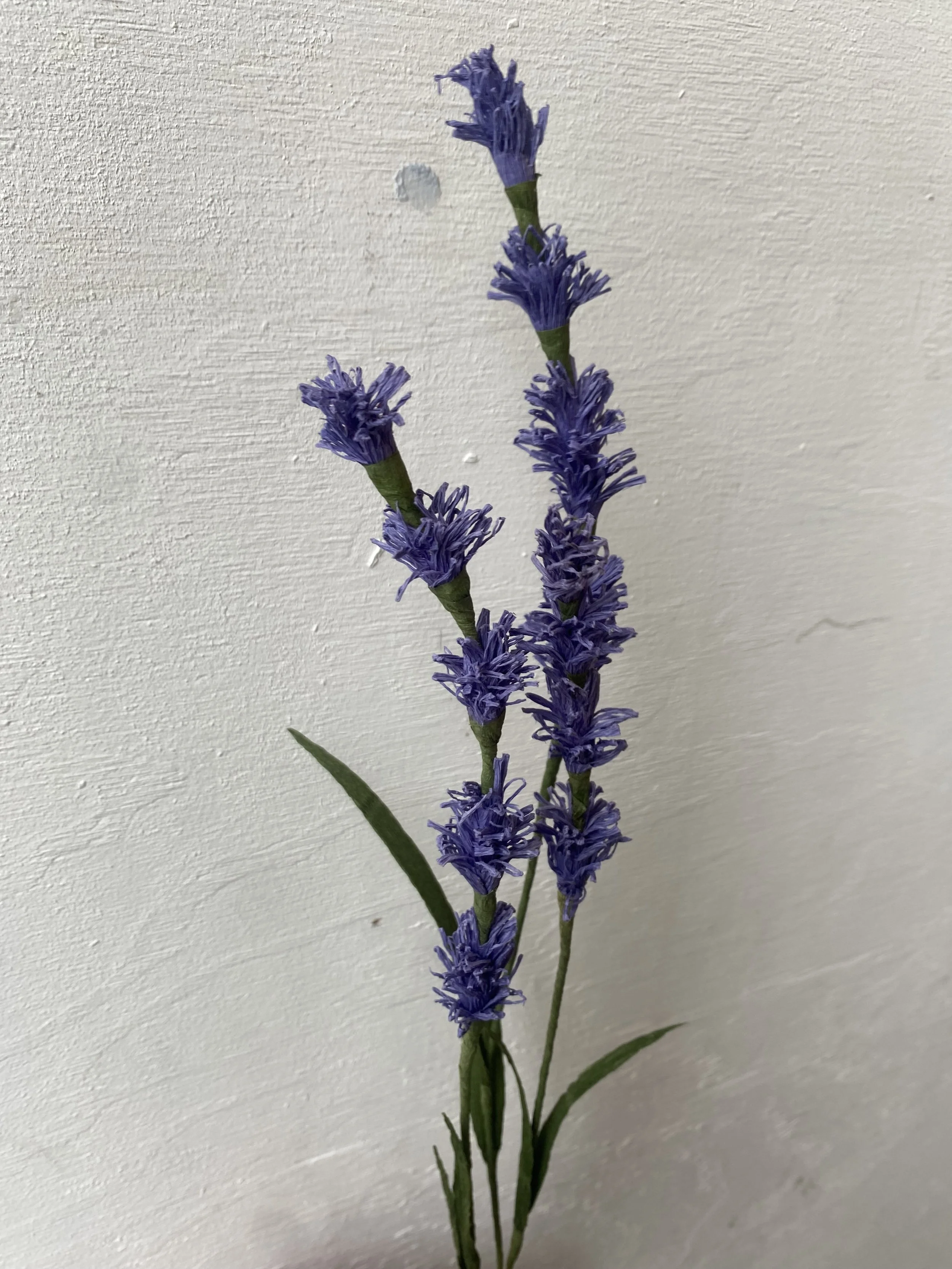
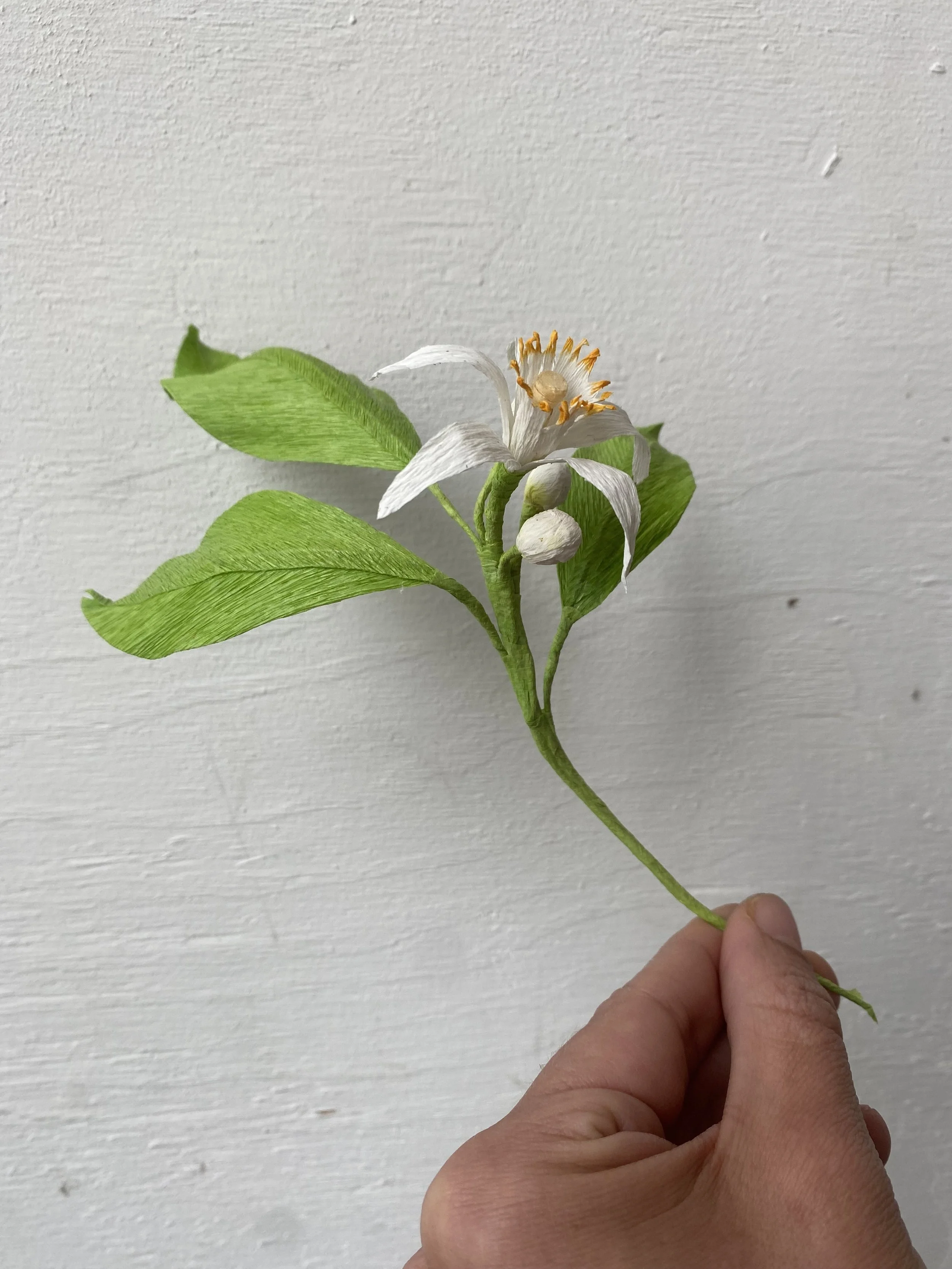
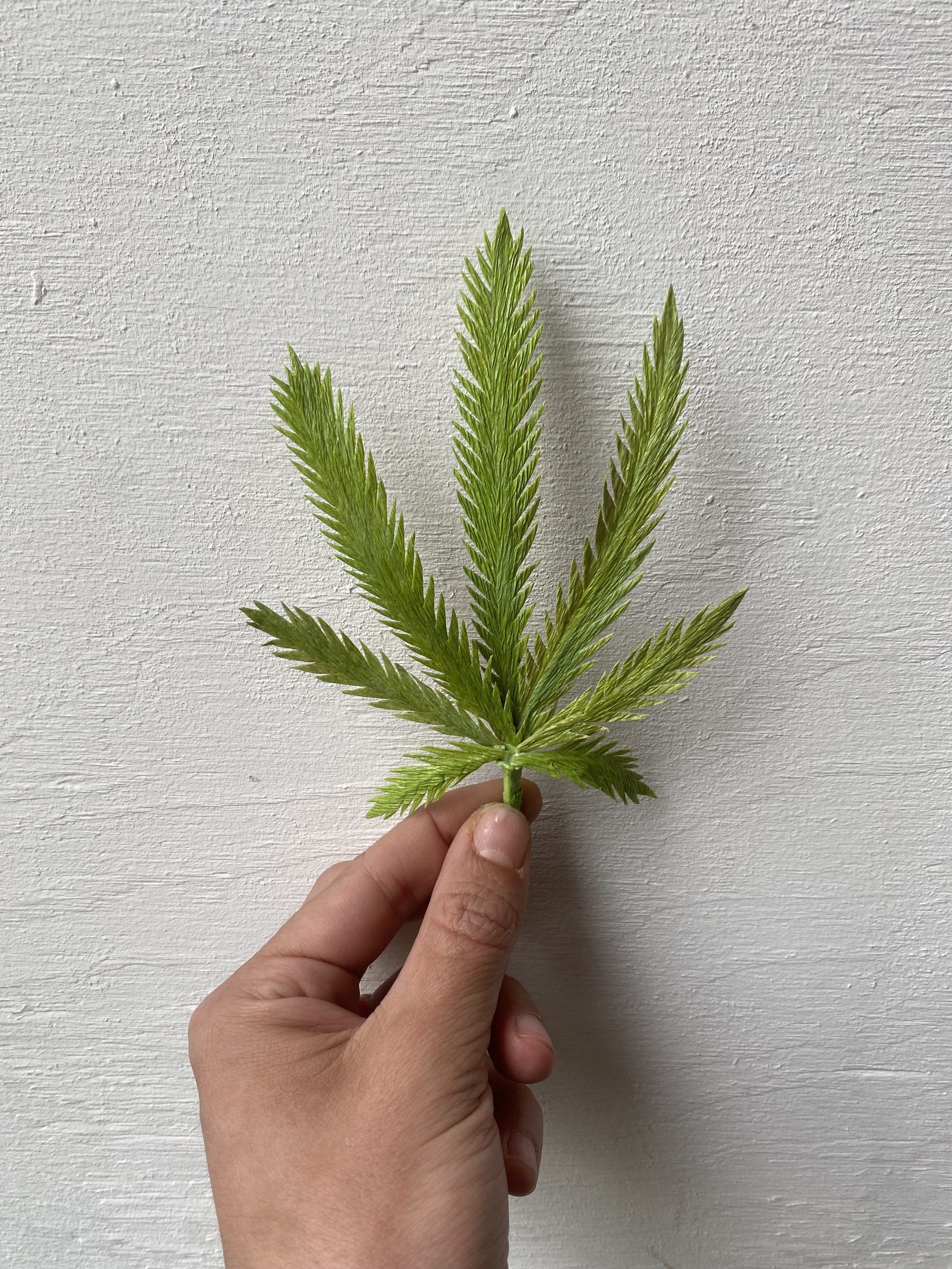
The brief was to bring some of those plants into paper. I made five: neroli, rose, lavender, rosemary and hemp.
I specifically remember feeling nervous about this project. I hadn’t made any of these botanicals before, so there was a lot to work out. But I ended up having so much fun experimenting, and grew more confident in my techniques as I went. Laminating paper — bonding layers together to make it stronger — was a particular part of that. It opened up more possibilities for what I could make.
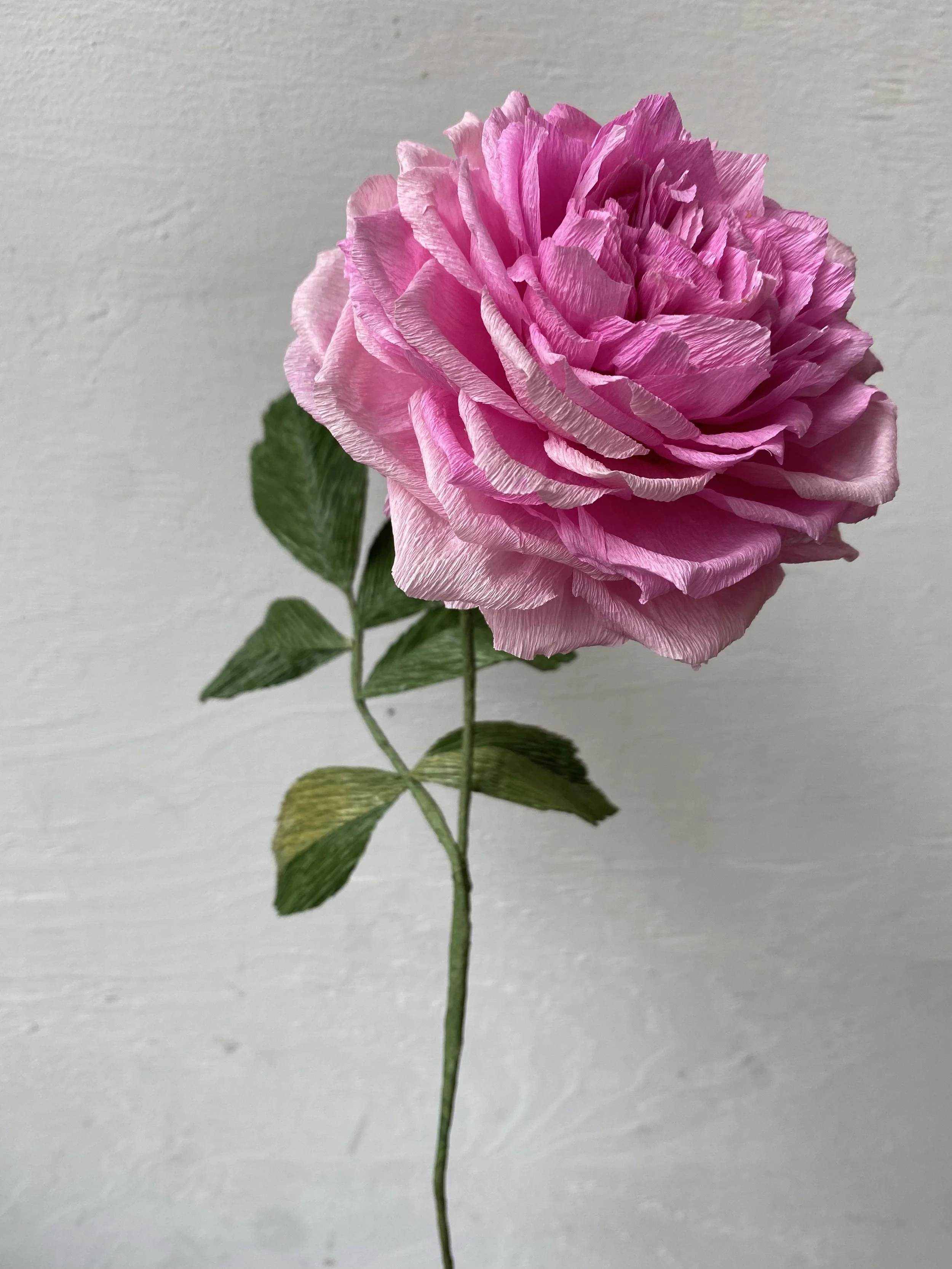
Neroli is orange blossom — small white flowers with yellow centres. Alongside the full pink rose, it made quite a contrast. The lavender and rosemary were finer again: tiny flowers spaced along stems, narrow leaves, details you have to look closely to see.
What I like about this group is how much variety there is within it. A rose is mostly about petals. With the hemp, the leaf is the whole piece: its pointed shape, the serrated edges, the way each section spreads from the centre. Together, the five botanicals showed a different side of paper flower making, with as much attention given to foliage as to the flowers.
When the pieces arrived, Cris wrote back to say how much they loved them, particularly the details in the rosemary. It’s lovely when someone notices something so small.
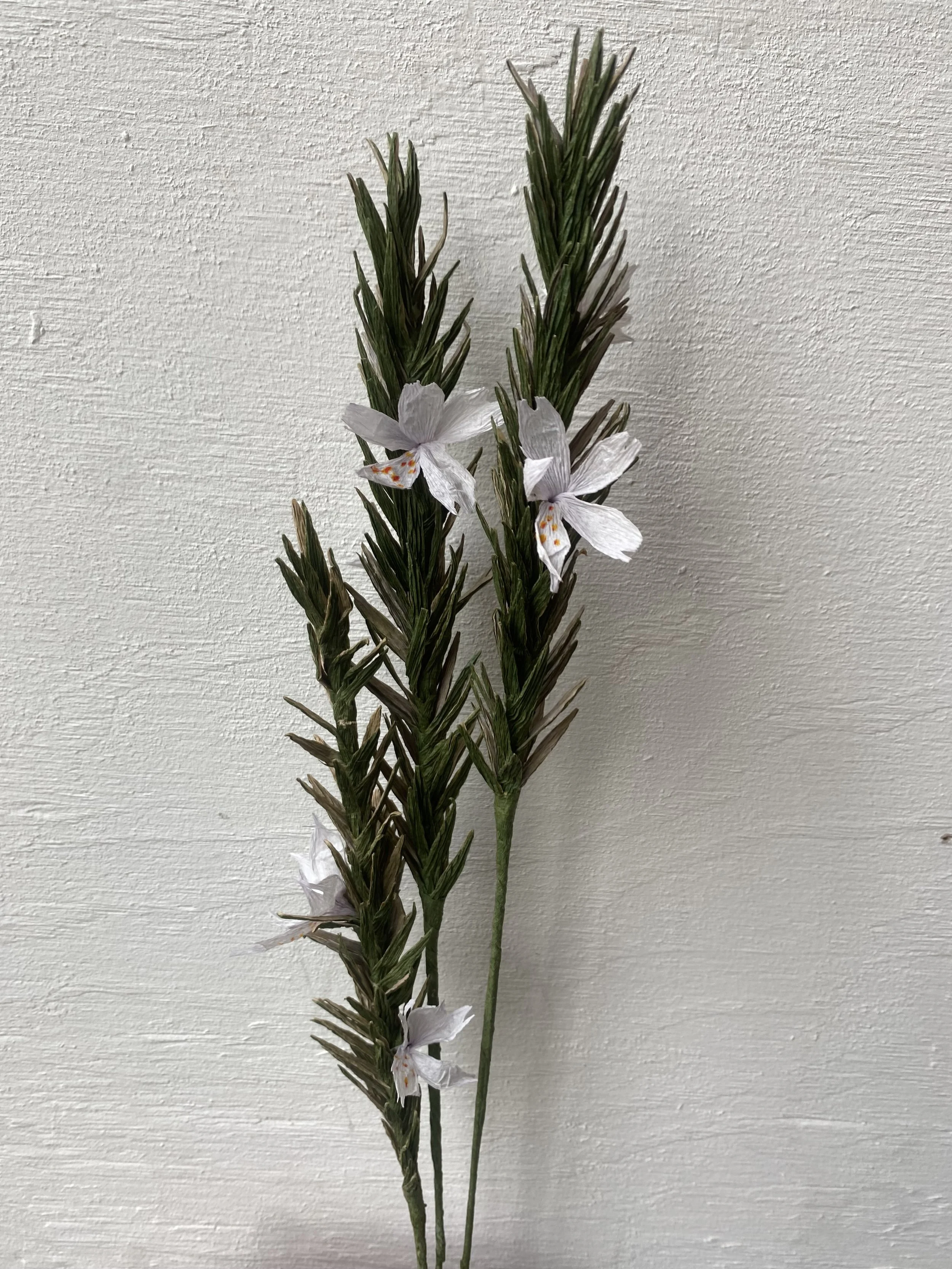
The botanicals later became part of the decoration for ROWSE’s summer pop-up in their Barcelona studio. These are my own photographs, taken before sending them off.
Looking back, I’m still happy with this little collection. I remember the uncertainty at the beginning, but mostly I remember how much I enjoyed figuring it all out.
I can also see how much my technique has developed since then, especially with roses. I was still working out how to shape and build the petals, and I approach them differently now. That’s part of what I enjoy about looking through the archive — remembering the work I was proud of at the time, and seeing how much I’ve learned since.